



استيراد سير عمل n8n
يستورد هذا الشرح العملي سير عمل مصدَّرًا من n8n — وكيل ذكاء اصطناعي يجيب عن رسائل الدردشة بنموذج دردشة من OpenAI وذاكرة — إلى Aggregate و Release و Manifest تبني معًا n8n حاملًا سير العمل من أجل Docker Compose كما هي مكتوبة، ثم يبنيها ويشغّل النتيجة. يأتي كل ملف وكل كتلة إخراج أدناه من تشغيل فعلي؛ ويوجد سير العمل وكل مرحلة من مراحل الشرح العملي في المثال import-n8n، حيث يعيد نص فحص برمجي تشغيل الاستيراد، ويقارن ما يكتبه وما يطبعه والكتل التي تنقلها هذه الصفحة بالملفات المحفوظة هناك، ويتحقق مما كتبه الاستيراد ويبنيه.
صُغ مسودة المثال
يمكنك تشغيل هذا الاستيراد بالأوامر الواردة في هذه الصفحة، أو اجعل مساعد الذكاء الاصطناعي يشغّله نيابةً عنك.
اكتب المثال في مجلد جديد يحمل اسمه:
aggrega draft --example import-n8nثم يطبع الأوامر التي تُشغَّل بعد ذلك. يدخل الأول إلى المجلد الجديد؛ ويدخل الذي يليه، أدناه، إلى مجلد source الخاص به، الذي يحوي ما تستورده هذه الصفحة وهو المكان الذي يجري فيه الاستيراد:
cd import-n8n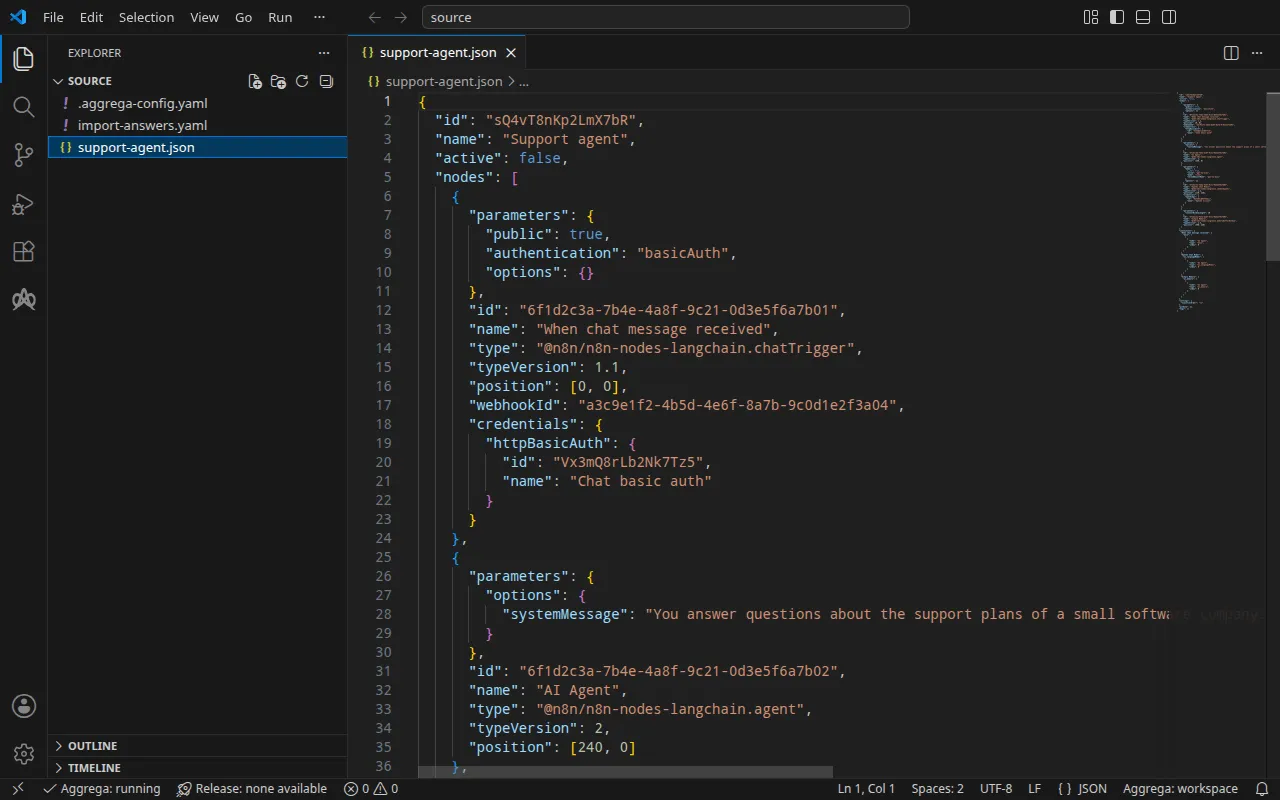
سير العمل
يحتوي support-agent.json، المكتوب لهذا الشرح العملي بالشكل الذي يصدّر به n8n سير العمل، على أربع عقد: عقدة chat trigger، وعقدة AI Agent برسالة نظام قصيرة، وعقدة OpenAI Chat Model تختار gpt-4o-mini، وعقدة Simple Memory، موصولة بالاتصالات التي يسردها n8n باسم العقدة التي يخرج منها كل اتصال. عقدة chat trigger عامة، فرسالة دردشة تُرسل إلى عنوان URL الخاص بها تبدأ سير العمل، وهي تطلب من المرسل اسم مستخدم وكلمة مرور، وتتحقق منهما مقابل بيانات اعتماد مصادقة أساسية يخزنها n8n:
"parameters": { "public": true, "authentication": "basicAuth", "options": {} }, [… omitted: the node's identifier, name, type, version, position and webhook identifier] "credentials": { "httpBasicAuth": { "id": "Vx3mQ8rLb2Nk7Tz5", "name": "Chat basic auth" } }تختار عقدة النموذج بيانات اعتمادها بالطريقة نفسها، بالإشارة — يحمل التصدير معرّف كل بيانات اعتماد واسمها، ولا يحمل أبدًا اسم المستخدم ولا كلمة المرور ولا المفتاح:
"parameters": { "model": { "__rl": true, "value": "gpt-4o-mini", "mode": "list", "cachedResultName": "gpt-4o-mini" }, "options": {} }, "id": "6f1d2c3a-7b4e-4a8f-9c21-0d3e5f6a7b03", "name": "OpenAI Chat Model", "type": "@n8n/n8n-nodes-langchain.lmChatOpenAi", "typeVersion": 1.2, "position": [120, 220], "credentials": { "openAiApi": { "id": "Rb7nW2xQ9kT4mZ1c", "name": "OpenAI account" } }بجانب سير العمل، يجعل ملف .aggrega-config.yaml المجلد مساحة عمل:
# The workspace key marks this directory as the workspace root, so an import run# here writes its drafts beside support-agent.json.workspace: {}# The registry the importer is fetched from the first time an import needs it.default_registry: hub.aggrega.aiويحمل import-answers.yaml الإجابات عن كل ما لا يستطيع أي سير عمل حمله. لا يحتاج استيراد من أجل Docker Compose إلى أي منها: إذ يُرفق مفتاح OpenAI بإشارة متغيّر يملؤها Docker Compose من shell لديك. أما استيراد من أجل Kubernetes فيُرفقه باسم Secret في Kubernetes، لا يستطيع تسميته غيرك، لذا يسمّي الملف ذلك Secret (انظر على Kubernetes):
# Values the import could not draft from the source, keyed by the drafted file and the key path inside# it. Write each one beside its key; an import of the same source, and a sync, read them from here and# ask nothing. A secret is never written here: its key asks where the secret comes from — a variable# name, ${NAME}, or the name of a Kubernetes Secret.release.yaml: # The origin of the secret value, written by the operator in the Release. Read exactly as # values.origin is. Write it here or in values.origin, never in both. A secret: name where it comes # from, never the value. spec.components.n8n.uses.model.openai-chat-model.features.credential.infra.origin: "openai-api-key"يصف ملف إجابات الاستيراد الملف بالتفصيل الكامل.
يقيّم الاستيراد كل عقدة مقارنةً مع Components الكتالوج في مساحة العمل، ويصوغ --target Manifest من Recipes الخاصة بها. لا تسمّي مساحة العمل أي مجلد كتالوج، لذا يقرأ الاستيراد كتالوج المكتبة القياسية من registry الذي يجلب منه مستورِده: لقطة موقَّعة للكتالوج المطروح، تُجلب وتُتحقق وتُحفظ في ذاكرة التخزين المؤقت لمحتوى مساحة العمل عند أول استيراد، ويسمّيها ملخّصها في الملف الذي يسجّل ما كتبه الاستيراد بجانب مسوداته. وتُستورد مساحة العمل التي تسمّي مجلدات كتالوج خاصة بها — في AGGREGA_CATALOG_DIRS، أو تحت workspace.catalog_dirs — مقابل تلك بدلًا من ذلك. انتقل إلى source:
cd sourceشغّل الاستيراد
aggrega import support-agent.json --target composeيسرد على الإخراج القياسي ما كتبه:
wrote aggregate.yamlwrote release.yamlwrote manifest.yamlwrote .aggrega-import.jsonعلى الخطأ القياسي، حيث يمثّل <workspace> المجلد الذي شغّلته فيه:
[… omitted: a warning that the importer runs unverified, printed where its module is read from beside its Plugin entity in a catalog folder rather than fetched]read as the n8n format, with drafted paths relative to <workspace>warn: the value of credentials.httpBasicAuth.id of node When chat message received is carried as written in the flow the draft carries: its format marks the field as a credential, and setting empty_credentials to marked or all writes it emptywarn: the value of credentials.openAiApi.id of node OpenAI Chat Model is carried as written in the flow the draft carries: its format marks the field as a credential, and setting empty_credentials to marked or all writes it emptywarn: node OpenAI Chat Model reaches openai-chat-model, wired to the model socket of core/ai-agent/n8n as openai-chat-model, other than through that connection: an n8n @n8n/n8n-nodes-langchain.lmChatOpenAi node reaches the part at the address the stored credential it selects, or its own parameters, give; the platform delivers this connection as OPENAI_BASE_URL and OPENAI_API_KEY, but an n8n workflow reads a variable of the platform's environment only through an expression reading $env, which the platform refuses while values.allow_env_access_in_nodes is false, the value the draft leaves it at; setting it true lets every workflow, and every user who can edit one, read every variable of the platform's environment, the delivered credentials includedmade no choice for When chat message received (@n8n/n8n-nodes-langchain.chatTrigger)made no choice for AI Agent (@n8n/n8n-nodes-langchain.agent)mapped OpenAI Chat Model (@n8n/n8n-nodes-langchain.lmChatOpenAi) to core/ai-model/openai as a reference, HIGH at 0.9143made no choice for Simple Memory (@n8n/n8n-nodes-langchain.memoryBufferWindow) warning: node "n8n" (provider "compose"): artifact "n8n-flow.compose-fragment.yaml": skipped provenance label injection — the fragment declares no compose service. Compose carries build provenance as service labels, so a fragment contributing only top-level networks, volumes or configs carries none; the services this component emits elsewhere carry the full set.Pull complete: <workspace>/release.lock (entities=8, source_artifacts=0, external_inputs=0)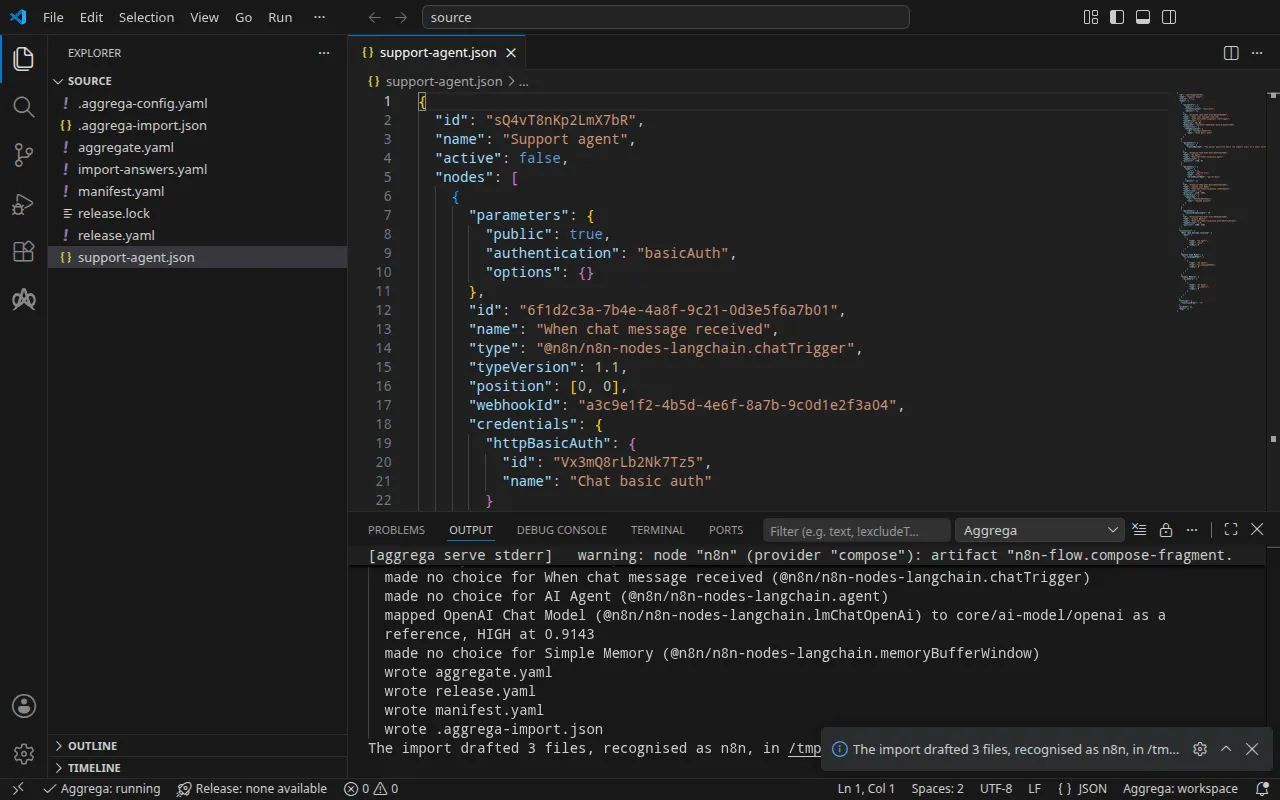
- يقول سطر
mappedإن عقدة OpenAI Chat Model أصبحت نموذج OpenAI في المكتبة القياسية،core/ai-model/openai، مشارًا إليه لا مصوغًا، لأنه طابق في المستوى المرتفع، بدرجة 0.9143: مكوِّن قائم بذاته، موصول بمقبسmodelالخاص بالمنصة. - تقول أسطر
made no choiceإن المحفِّز والوكيل والذاكرة تبقى داخل سير العمل، الذي يشغّله n8n بنفسه. - يسمّي أول سطرين
warnمعرّفي بيانات الاعتماد المخزَّنة التي يختارها المحفِّز وعقدة النموذج، ويعلّمها n8n بوصفها بيانات اعتماد. وهي إشارات لا أسرار، وتُنقل كما كُتبت. - سطر
warnالثالث هو الذي يجب قراءته بعناية: تصل عقدة النموذج إلى OpenAI ببيانات الاعتماد المخزَّنة التي تختارها، لا عبر الاتصال الذي توصّله المسودة. تسلّم المنصة الاتصال إلى بيئة n8n، ويرفض n8n قراءة سير العمل لبيئته ما دام Aggregate يتركvalues.allow_env_access_in_nodesعلىfalse، كما تفعل المسودة. وضبطه علىtrueيتيح لكل سير عمل، ولكل من يستطيع تحرير واحد، قراءة كل متغيّر في المنصة، ومنه المفتاح المسلَّم. لذا فالمفتاح الذي يستخدمه سير العمل هو الذي يخزنه n8n، كما يبيّن شغِّله. - السطران الأخيران هما عملية pull. لم يبق شيء للإجابة عنه، فنفّذ الاستيراد pull لتبعيات Release المصوغ، كما يفعل
aggrega pull، وكتبrelease.lock؛ ولا يحتاج البناء أدناه إلى شيء آخر. وسطرwarningهو سطر يطبعه البناء أيضًا، ويشرحه التحقق والبناء.
يسمّي ملف الإجابات Secret لا يسأل عنه هذا الاستيراد: فهو لا يترك له شيئًا فارغًا، لذا لا يطبّق أي إجابة ويترك الملف كما هو.
ما يكتبه
يُسمّى كل من Aggregate و Release و Manifest imported/support-agent، نسبة إلى اسم سير العمل نفسه، Support agent، مختزلًا إلى support-agent — وسير العمل بلا اسم يُسمّى نسبة إلى ملفه — ضمن مساحة الأسماء التي يحددها إعداد target_namespace الخاص بالمستورِد، وهي imported ما لم تحدد غيرها (الإعدادات).
aggregate.yaml — مثيل واحد من منصة n8n في المكتبة القياسية، core/ai-agent/n8n، يحمل سير العمل كما صُدِّر، وقد حُذف معظمه هنا، والنموذج موصول بمقبس model الخاص به:
apiVersion: aggrega.ai/v1beta1kind: Aggregatemetadata: name: imported/support-agent version: 0.1.0 description: Draft Aggregate imported from a source in the n8n format.spec: components: n8n: type: core/ai-agent/n8n values: workflow_id: 'sQ4vT8nKp2LmX7bR' flow_definition: | { "id": "sQ4vT8nKp2LmX7bR", "name": "Support agent", [… omitted: the rest of the workflow, as exported] } uses: model: openai-chat-model: target: openai-chat-model # For the compose target, the lines below declare credential on openai-chat-model: a secret the Release alone attaches arrives under the key value, so each is declared with a key of its own and no two arrive under one; the Release attaches its origin, naming this type or none. features: credential: type: core/secret-value values: key: OPENAI_API_KEY # swap to core/ai-model/azure-openai (score 0.4125) by setting type: core/ai-model/azure-openai openai-chat-model: type: core/ai-model/openai values: model: |- gpt-4o-miniworkflow_id هو المعرّف الذي يعطيه التصدير لسير العمل. والنموذج هو core/ai-model/openai، مع النموذج الذي تختاره العقدة، gpt-4o-mini؛ ويسمّي التعليق فوقه Component آخر من الكتالوج تشبهه العقدة، مع درجته. ويُعلَن مفتاح OpenAI الذي تقدمه المنصة إلى النموذج على الاتصال بالمتغيّر الذي يصل به في بيئة n8n، OPENAI_API_KEY؛ ويبيّن Release من أين يأتي.
release.yaml — هو Release الذي ينشر Aggregate باستخدام Manifest:
apiVersion: aggrega.ai/v1beta1kind: Releasemetadata: name: imported/support-agent # environment is a drafted default, since no source names the environment this Release deploys to; change it to name the one it deploys to. environment: development version: 0.1.0 description: Draft Release imported from a source in the n8n format.spec: aggregate: imported/support-agent manifest: imported/support-agent components: n8n: infra: # The image running core/ai-agent/n8n, at the version this importer drafts, which the catalog's Recipes for it are known to run; the import does not raise or lower it to follow the source. image: "n8nio/n8n:1.110.1" # Published on this machine's loopback address, 127.0.0.1: reachable from this machine only, by any process running on it. Delete this line to keep the service internal. published_port: 5678 uses: model: openai-chat-model: features: credential: type: core/secret-value infra: # Attached by reference, never as a value: the credential n8n presents to openai-chat-model on its model connection, read from the variable OPENAI_API_KEY, which a target substituting variable references, as Docker Compose does when the stack starts, reads from the environment, so no file carries the value. origin: "${OPENAI_API_KEY}" openai-chat-model: {}environmentهوdevelopment، قيمة افتراضية يطلب التعليق الذي فوقه تغييرها إلى البيئة التي ينشر Release فيها.- صورة الحاوية هي n8n 1.110.1، الإصدار الذي تشغّله Recipes الكتالوج المخصصة لمنصة n8n.
published_portهو 5678، المنفذ الذي يخدم n8n عليه، فيجيب المحرر علىhttp://127.0.0.1:5678على جهازك. وكما يقول تعليقه، تستطيع أي عملية على هذا الجهاز الوصول إليه هناك ولا شيء آخر؛ احذف السطر لإبقاء n8n على شبكة المكدس وحدها. وأيpublished_portغير 5678 يحتاج إلىinfra.external_base_url: http://127.0.0.1:<published_port>بجانبه، وإلا أبلغ n8n عن عنواني محرره و webhook علىlocalhost:5678.- المفتاح هو إشارة متغيّر،
${OPENAI_API_KEY}، يملؤها Docker Compose من shell لديك عند بدء المكدس. نموذج OpenAI في المكتبة القياسية خدمة مستضافة، ويجب أن يحمل الاتصال بها بيانات اعتماد، لذا يرفق Release بيانات اعتماد حتى وإن كان سير العمل يقرأ مفتاحه من مخزن n8n.
manifest.yaml — Recipes Compose للمنصة والنموذج، والتحقيق الذي يكتب إشارة المتغيّر الخاصة بالمفتاح في ملف Compose كما كُتبت:
apiVersion: aggrega.ai/v1beta1kind: Manifestmetadata: name: imported/support-agent version: 0.1.0spec: mappings: components: type: core/ai-agent/n8n: compose/n8n core/ai-model/openai: compose/openai features: type: core/secret-value: compose/dotenv-secret.aggrega-import.json هو ملف يسجّل ما كتبه الاستيراد، ويقرؤه الأمر aggrega import --sync الذي يُشغَّل لاحقًا، ويثبّت release.lock كل كيان في الكتالوج يؤول إليه Release، بحسب الإصدار والملخّص.
التحقق والبناء
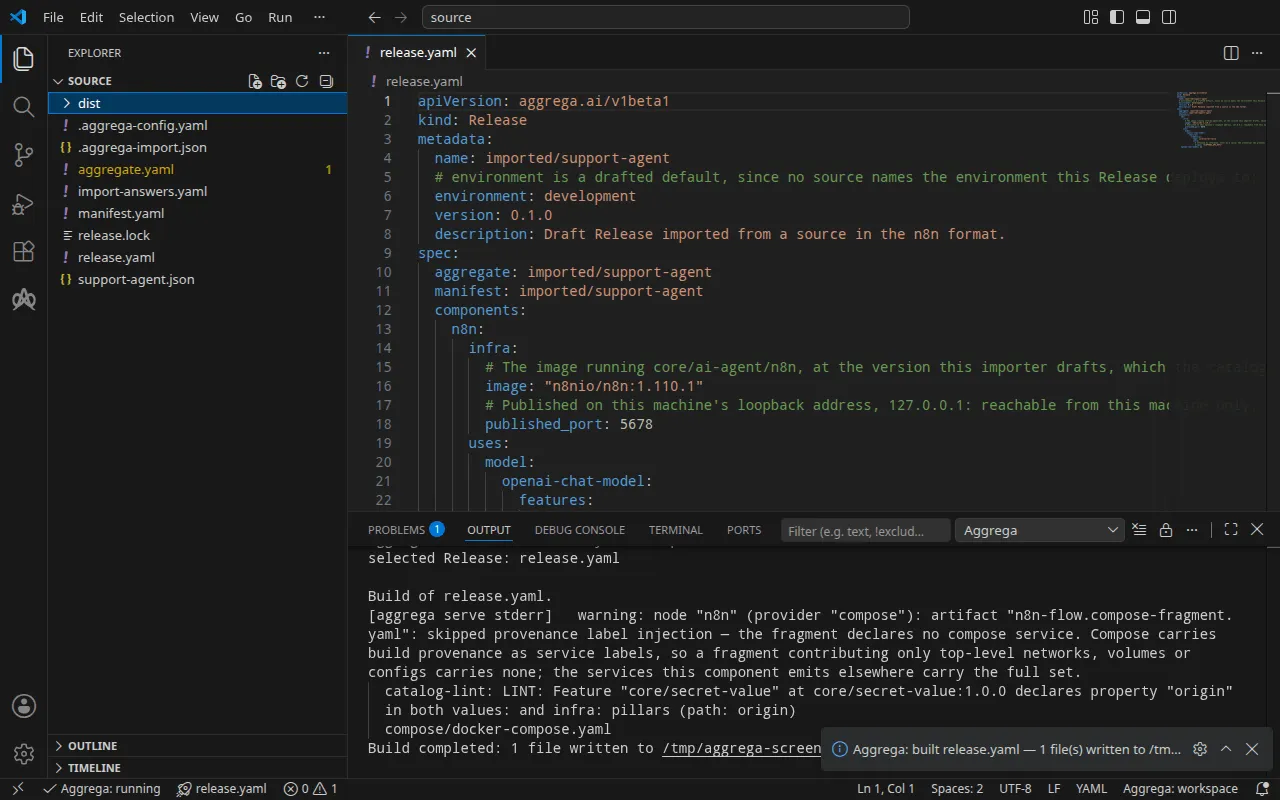
aggrega validate --release release.yamlaggrega build --release release.yaml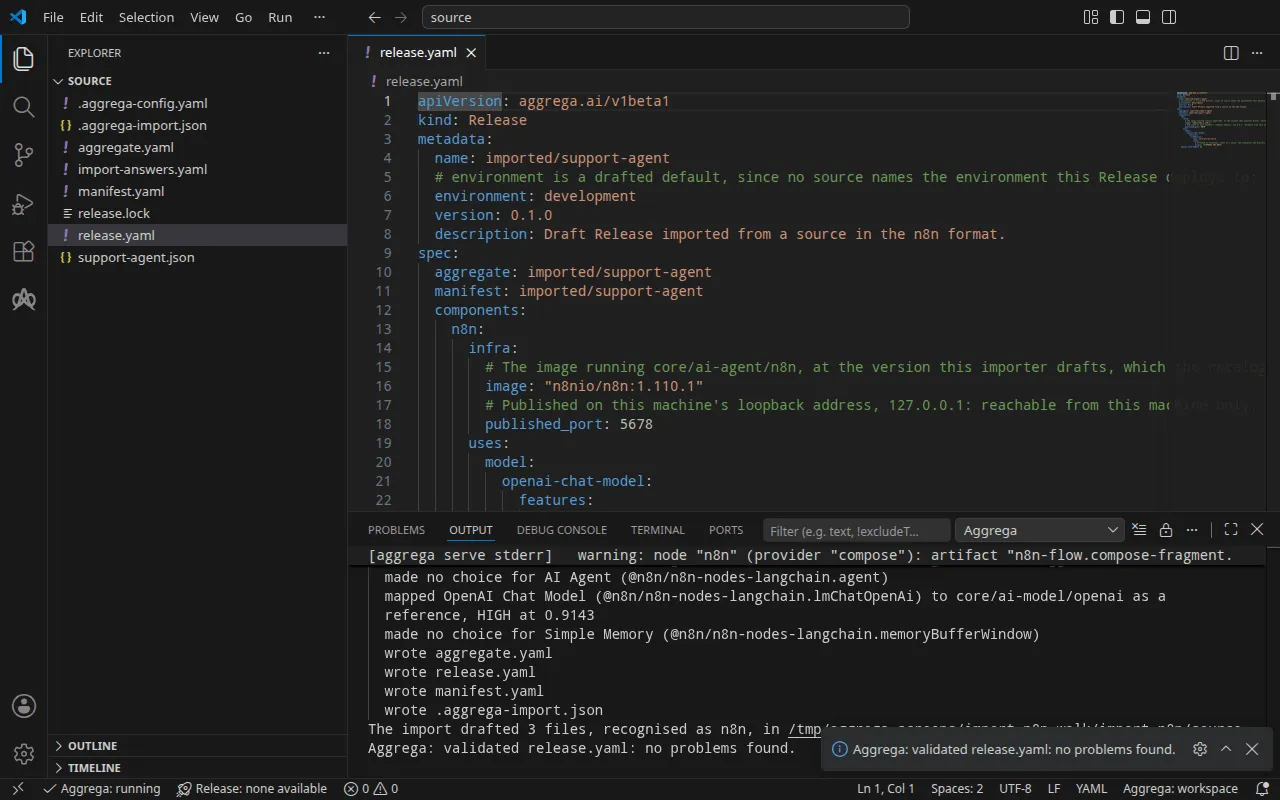
يطبع التحقق:
notice: LINT: Feature "core/secret-value" at core/secret-value:1.0.0 declares property "origin" in both values: and infra: pillars (path: origin)release dependency validation passed: release.yaml (schema-pillar + dependency pillars)ويطبع البناء، مع وقوف <workspace> مكان المجلد الذي يضم المسودات:
warning: node "n8n" (provider "compose"): artifact "n8n-flow.compose-fragment.yaml": skipped provenance label injection — the fragment declares no compose service. Compose carries build provenance as service labels, so a fragment contributing only top-level networks, volumes or configs carries none; the services this component emits elsewhere carry the full set. notice: LINT: Feature "core/secret-value" at core/secret-value:1.0.0 declares property "origin" in both values: and infra: pillars (path: origin)[… omitted: a total build time, which differs per run]Build completed: 1 file written to <workspace>/distسطر warning يخص جزء ملف Compose الذي يحمل سير العمل، وهو إدخال configs على المستوى الأعلى، وليس له خدمة يضع عليها تسميات البناء. وسطر notice استشاري: يقبل Feature الأسرار قيمة origin من values في Aggregate أو من infra في Release، ويبلّغ الإشعار بأن ورقة واحدة معلنة في كليهما. ولا يغيّر أي منهما الحكم.
يحمل dist/compose/docker-compose.yaml منصة n8n وخدمة تستورد سير العمل قبل أن يبدأ n8n:
services: n8n: image: n8nio/n8n:1.110.1 environment: OPENAI_BASE_URL: https://api.openai.com/v1 OPENAI_API_KEY: ${OPENAI_API_KEY} N8N_BLOCK_ENV_ACCESS_IN_NODE: "true" ports: - 127.0.0.1:5678:5678 [… omitted: the labels the build writes on every service, naming the Aggregate, the component, the environment and the compiler's version] volumes: - type: volume source: n8n--data target: /home/node/.n8n networks: - compose depends_on: n8n--import-flow: condition: service_completed_successfully [… omitted: the service's health check] n8n--import-flow: image: n8nio/n8n:1.110.1 command: - import:workflow - --input=/flows/workflow.json entrypoint: - n8n [… omitted: the labels the build writes on every service] volumes: - type: volume source: n8n--data target: /home/node/.n8n networks: - compose restart: "no" configs: - source: n8n-flow target: /flows/workflow.jsonيصل سير العمل إلى n8n عبر n8n import:workflow، الذي يعمل على وحدة تخزين البيانات نفسها في كل مرة يبدأ فيها المكدس، قبل n8n نفسه. وقيمة N8N_BLOCK_ENV_ACCESS_IN_NODE هي "true"، وهو حظر n8n لقراءة سير العمل لبيئته، لأن Aggregate يترك allow_env_access_in_nodes على false. لذا تقرأ عقدة OpenAI Chat Model مفتاحها من مخزن بيانات الاعتماد في n8n نفسه، كما يقرأ chat trigger اسم المستخدم وكلمة المرور، ويخزنهما التشغيل أدناه معًا. ولا يطرح Recipe Compose الخاص بمنصة n8n منفذًا على جهازك إلا حيث يضبط Release قيمة published_port في infra الذي يخص المنصة، ثم على عنوان الحلقة الراجعة، 127.0.0.1، وحده؛ ودونه لا يُوصل إلى الخدمة إلا على شبكة المكدس.
مع مساعد الذكاء الاصطناعي
يستطيع مساعد الذكاء الاصطناعي المُعَدّ بأدوات Aggrega أن يفعل الشيء نفسه: الصق هذا الموجِّه فيه.
استخدم أدوات Aggrega فقط، ولا تنشئ أي مجلد بنفسك. إذا كان مجلد مساحة العمل لا يحتوي بعد على مجلد `import-n8n`، فاستدعِ الأداة `draft` مرة واحدة مع ضبط `example` على `import-n8n` ودون `dir`: فهي تكتب المثال في مجلد `import-n8n` جديد، يحتوي مجلده `source` على ما تستورده هذه الصفحة. ثم استدعِ الأداة `import` مع ضبط `workspace_root` على `import-n8n/source` و `source` على `support-agent.json` و `target` على `compose`: فهي تقرأ الإجابات التي تحتاجها من `import-answers.yaml` بجانب `support-agent.json`، وتكتب مسوداتها في `import-n8n/source` وتجري pull لكل ما تحتاجه. ثم استدعِ الأداة `validate` مع ضبط `workspace_root` على `import-n8n/source` و `release` على `release.yaml`، والأداة `build` مع ضبط `workspace_root` على `import-n8n/source` و `release` على `release.yaml` و `write` على true. أخبرني بالملفات التي كتبها البناء؛ فهي ضمن `import-n8n/source/dist/`.افتحه في VS Code
بعد تثبيت امتداد Aggrega لمحرر Visual Studio Code، افتح المجلد import-n8n/source في VS Code، حيث كتب الاستيراد مسوداته. يحتوي المجلد على Release واحد هو release.yaml المصوغ، فيحدده المحرر لك، ويفحص المسودات مقابل ذلك Release أثناء تحريرك لها، ويعلّم ما يجده في الملف وفي لوحة Problems. ويرسم الأمر Aggrega: Show topology graph، في لوحة الأوامر، مكوِّنات Release والاتصالات بينها. وتعمل Aggrega: Build و Aggrega: Preview build و Aggrega: Pull على Release نفسه، وكل منها أيضًا زر في لوحة Commands ضمن عرض Aggrega في شريط النشاط؛ ويكتب Build ملفاته في dist/ الخاص بالمجلد. يغطي استخدام Aggrega في Visual Studio Code بقية الأمور.
شغِّله
يقرأ n8n من مخزنه الخاص بيانات الاعتماد التي يختارها سير العمل، وهي اثنتان، بمعرّفاتها: مفتاح OpenAI تحت Rb7nW2xQ9kT4mZ1c، واسم مستخدم الدردشة وكلمة مرورها تحت Vx3mQ8rLb2Nk7Tz5. ويخزنها سطر أوامر n8n نفسه، تحت هذين المعرّفين، من ملف. اكتبها في credentials.json، بقيمك أنت:
[ {"id": "Rb7nW2xQ9kT4mZ1c", "name": "OpenAI account", "type": "openAiApi", "data": {"apiKey": "your OpenAI key"}}, {"id": "Vx3mQ8rLb2Nk7Tz5", "name": "Chat basic auth", "type": "httpBasicAuth", "data": {"user": "a user of your own", "password": "a password of your own"}}]اضبط المفتاح في shell لديك، كما يقرؤه Release المصوغ، وابدأ المكدس:
export OPENAI_API_KEY='your OpenAI key'docker compose -p support-agent -f dist/compose/docker-compose.yaml up -d --waitيسمّي -p المشروع، كما تشرح خطوة التشغيل في كيف يعمل الاستيراد. ويعود --wait حين يبلّغ n8n أنه سليم، بعد أن تكون الخدمة التي تستورد سير العمل قد عملت وانتهت. انسخ بيانات الاعتماد إلى حاوية n8n، واستوردها، واحذف النسخة:
docker compose -p support-agent -f dist/compose/docker-compose.yaml exec -T n8n sh -c 'umask 077; cat > /tmp/credentials.json' < credentials.jsondocker compose -p support-agent -f dist/compose/docker-compose.yaml exec n8n n8n import:credentials --input=/tmp/credentials.jsondocker compose -p support-agent -f dist/compose/docker-compose.yaml exec n8n rm /tmp/credentials.json[… omitted: n8n's notices about its settings file's permissions, error tracking and deprecated settings]Successfully imported 2 credentials.يحتفظ n8n الآن ببيانات الاعتماد كلها، فاحذف credentials.json:
rm credentials.jsonثم فعّل سير العمل، وأعد تشغيل n8n حتى يسري التفعيل:
docker compose -p support-agent -f dist/compose/docker-compose.yaml exec n8n n8n update:workflow --id=sQ4vT8nKp2LmX7bR --active=truedocker compose -p support-agent -f dist/compose/docker-compose.yaml restart n8nحين يُظهر docker compose -p support-agent -f dist/compose/docker-compose.yaml ps n8n أن n8n صار (healthy) مرة أخرى، يعرض docker compose -p support-agent -f dist/compose/docker-compose.yaml logs n8n السطر Activated workflow "Support agent" (ID: sQ4vT8nKp2LmX7bR).
اختبره
افتح http://127.0.0.1:5678، وهو العنوان الذي يطرحه published_port: يطلب محرر n8n حساب مالك عند أول زيارة، ثم يعرض Support agent.
لا يقبل chat trigger رسالة إلا مع اسم المستخدم وكلمة المرور المخزنين أعلاه؛ وبدونهما يجيب HTTP/1.1 401 Unauthorized و Authorization is required!، ومع كلمة مرور خاطئة HTTP/1.1 403 Forbidden. ومع وجود الاثنين في CHAT_USER و CHAT_PASSWORD، يقرؤهما curl من الإدخال القياسي له، فلا يظهران في أي سطر أوامر:
printf 'user = "%s:%s"\n' "$CHAT_USER" "$CHAT_PASSWORD" | curl --config - -sS -i -X POST \ http://127.0.0.1:5678/webhook/a3c9e1f2-4b5d-4e6f-8a7b-9c0d1e2f3a04/chat -H 'Content-Type: application/json' \ -d '{"action": "sendMessage", "sessionId": "s1", "chatInput": "In one short sentence: what does a support plan cover?"}'HTTP/1.1 500 Internal Server Error[… omitted: the response's other headers]
{"message":"Error in workflow"}خزّن التشغيل قيمة نائبة لمفتاح OpenAI، فتوقف سير العمل عند استدعائه النموذج. ويحتفظ n8n بالتنفيذ، الذي يسرده المحرر ضمن تنفيذات سير العمل، مع رفض OpenAI: Incorrect API key provided: sk-place*****************-key. ومع مفتاحك تكون الاستجابة HTTP/1.1 200 OK وجواب الوكيل، على شكل {"output": "…"}.
على Kubernetes، وبعد تطبيق البناء الذي يصفه قسم على Kubernetes، يحتفظ n8n ببياناته في وحدة تخزين تعيش ما دامت pod الخاصة به، لذا تبدأ pod جديدة دون ما خزّنته؛ فخزّن بيانات الاعتماد وفعّل سير العمل على المثيل العامل بدلًا من ذلك. اكتب credentials.json كما يفعل شغِّله، واستورده عبر kubectl exec، من الإدخال القياسي له، في مساحة الأسماء التي طبّقت عليها، واحذفه بعد ذلك:
kubectl exec -i -n <namespace> deploy/n8n -- n8n import:credentials --input=/dev/stdin < credentials.jsonDefaulted container "main" out of: main, import-flow (init)[… omitted: n8n's notices about its settings file's permissions, error tracking and deprecated settings]Successfully imported 2 credentials.أعد توجيه منفذ محلي إلى Service منصة n8n، n8n-default، واترك الأمر يعمل:
kubectl port-forward -n <namespace> svc/n8n-default 5678:5678من طرفية أخرى، أنشئ حساب المالك عبر واجهة n8n البرمجية، التي تسجّل دخولك وتحتفظ بالجلسة في cookies.txt، ثم فعّل سير العمل:
curl -sS -c cookies.txt -X POST http://127.0.0.1:5678/rest/owner/setup -H 'Content-Type: application/json' \ -d '{"email": "owner@example.com", "firstName": "Your", "lastName": "Name", "password": "a password of your own"}'curl -sS -b cookies.txt -X PATCH http://127.0.0.1:5678/rest/workflows/sQ4vT8nKp2LmX7bR \ -H 'Content-Type: application/json' -d '{"active": true}'الاستجابة الثانية هي سير العمل، مع "active":true. وتصل رسالة الدردشة أعلاه إليه بعد ذلك على العنوان نفسه دون تغيير؛ وقد حصل التشغيل على {"message":"Error in workflow"} نفسه وعلى الرفض نفسه في التنفيذ.
أوقف المكدس بالأمر أدناه. يزيل -v أيضًا وحدة تخزين بيانات n8n، ومعها بيانات الاعتماد المخزنة والتفعيل:
docker compose -p support-agent -f dist/compose/docker-compose.yaml down -vعلى Kubernetes
يُستورد سير العمل نفسه من أجل Kubernetes بالهدف helm. أما مسودات Docker Compose فموجودة أصلًا في source، والاستيراد لا يكتب أبدًا فوق Aggregate هناك، لذا صُغ هذه المسودات في مجلد خاص بها بالخيار --output-dir، ثم تحقق وابنِ منه:
aggrega import support-agent.json --target helm --output-dir helmcd helmaggrega validate --release release.yamlaggrega build --release release.yamlتختلف المسودات حيث يختلف الهدف. يطابق Manifest المنصة مع helm/n8n، والنموذج مع helm/openai، والمفتاح مع helm/k8s-existing-secret، الذي يقرؤه من Secret موجود أصلًا في مساحة الأسماء. ويرفق Release المفتاح بوصفه core/referenced-secret، ويسمّي ذلك Secret، وهو openai-api-key، من ملف الإجابات.
يكتب البناء ملفات بيان Kubernetes العادية ضمن dist/helm/ في جذر مساحة العمل، source، وهو من helm المسار ../dist/helm/. أنشئ Secret في مساحة الأسماء التي تطبّق عليها، يحمل المفتاح تحت مفتاح البيانات value، ثم طبّق المجلد كما تشرح خطوة التشغيل في كيف يعمل الاستيراد. ولا يزال سير العمل يقرأ بيانات اعتماده من مخزن n8n نفسه، الذي يملؤه اختبره على Kubernetes.