

MCP 클라이언트 구성 가져오기
이 단계별 안내에서는 코딩 어시스턴트에 구성된 Model Context Protocol 서버, 즉 명령줄에서 시작하는 두 개와 다른 누군가가 운영하는 하나를 가져온 다음, 클러스터에서 실행되는 에이전트가 같은 도구에 접근할 수 있도록 Kubernetes용으로 서버를 빌드합니다. 가져오기는 빌드가 읽는 모든 파일을 초안으로 작성합니다. 각 서버의 명령줄 또는 주소, 그것을 실행하는 실현, 그리고 GitHub 서버 토큰의 출처입니다. 아래의 모든 파일과 출력 블록은 실제 실행에서 나온 것입니다. 구성과 단계별 안내의 각 단계는 import-mcp 예제에 있으며, 그곳의 검사 스크립트가 가져오기를 다시 실행하여 작성한 내용, 출력한 내용, 이 페이지가 인용하는 블록을 그곳에 보관된 파일과 비교하고, 가져오기가 작성한 것을 검증하고 빌드합니다.
예제 생성하기
이 페이지의 명령으로 이 가져오기를 실행하거나, AI 어시스턴트가 대신 실행하게 할 수 있습니다.
예제 이름을 딴 새 폴더에 예제를 씁니다:
aggrega scaffold --example import-mcp그런 다음 이어서 실행할 명령을 출력합니다. 첫 번째 명령은 새 폴더로 이동합니다. 그 뒤의 명령은 아래와 같으며, 새 폴더 안의 source 폴더로 이동합니다. 이 폴더에는 이 페이지가 가져오는 내용이 들어 있으며, 가져오기는 여기서 실행됩니다:
cd import-mcp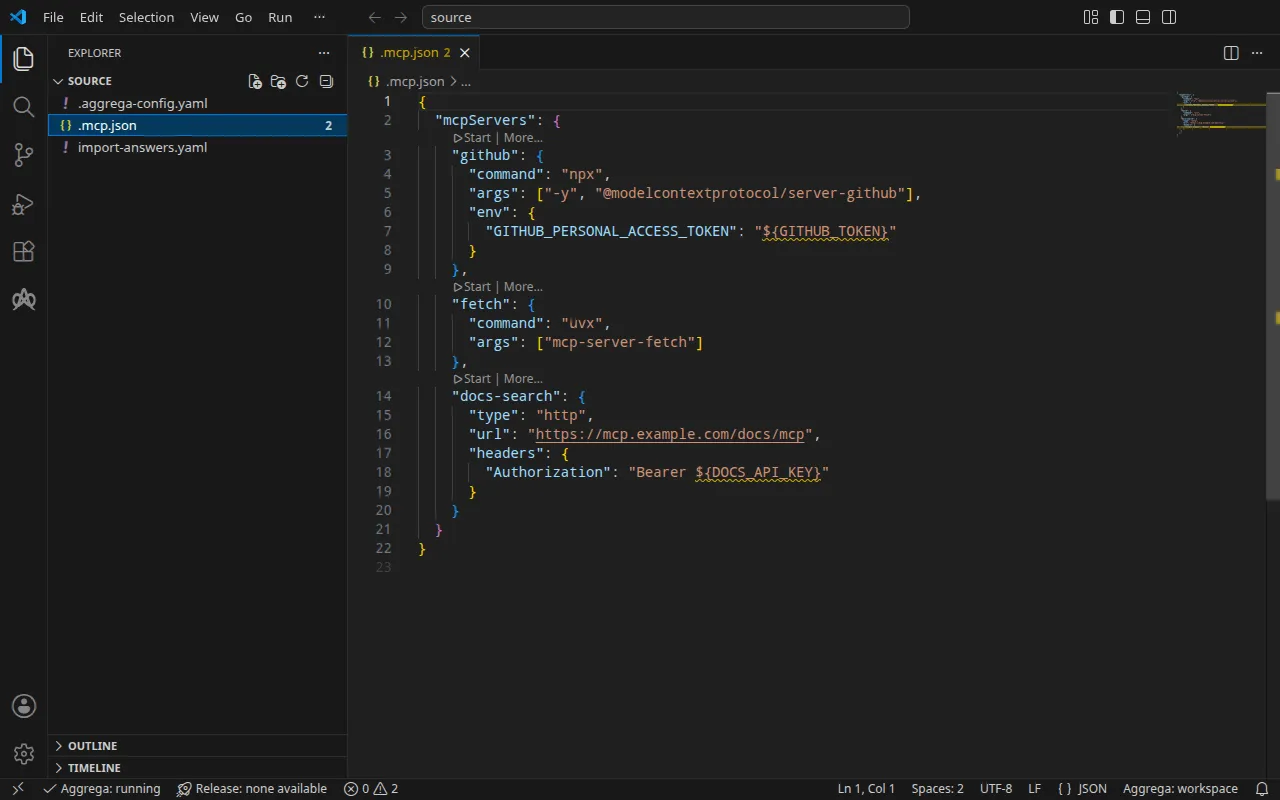
구성
프로젝트 루트에 있는 Claude Code의 .mcp.json:
{ "mcpServers": { "github": { "command": "npx", "args": ["-y", "@modelcontextprotocol/server-github"], "env": { "GITHUB_PERSONAL_ACCESS_TOKEN": "${GITHUB_TOKEN}" } }, "fetch": { "command": "uvx", "args": ["mcp-server-fetch"] }, "docs-search": { "type": "http", "url": "https://mcp.example.com/docs/mcp", "headers": { "Authorization": "Bearer ${DOCS_API_KEY}" } } }}가져오기는 Claude Desktop의 claude_desktop_config.json, Cursor의 .cursor/mcp.json, Visual Studio Code의 .vscode/mcp.json, 그리고 MCP 레지스트리 server.json도 같은 방식으로 읽습니다. 구성 옆의 .aggrega-config.yaml이 폴더를 워크스페이스로 만듭니다:
# The workspace key marks this directory as the workspace root, so an import run# here writes its drafts beside .mcp.json.workspace: {}# The registry the importer is fetched from the first time an import needs it.default_registry: hub.aggrega.ai--target은 카탈로그의 Recipes로부터 Manifest 초안을 작성합니다. 작업 공간이 카탈로그 폴더를 지정하지 않으므로, 가져오기는 임포터를 받아 오는 레지스트리에서 표준 라이브러리 카탈로그를 읽습니다. 이는 게시된 카탈로그의 서명된 스냅샷으로, 첫 번째 가져오기가 받아 와서 검증한 뒤 작업 공간의 콘텐츠 캐시에 보관하며, 가져오기가 초안 옆에 작성하는 기록에 그 다이제스트로 지정됩니다. AGGREGA_CATALOG_DIRS에서 또는 workspace.catalog_dirs 아래에서 자체 카탈로그 폴더를 지정하는 작업 공간은 대신 그 폴더들을 기준으로 가져옵니다.
응답 파일
Kubernetes에서 GitHub 서버는 클러스터가 보유한 Secret에서 토큰을 읽으며, 어떤 MCP 구성도 그 Secret을 지정하지 않습니다. 구성은 셸의 GITHUB_TOKEN에서 토큰을 읽습니다. 따라서 가져오기는 Secret의 이름을 묻습니다. 이 예제는 가져오기가 답을 찾는 위치인 .mcp.json 옆의 import-answers.yaml에 답을 보관합니다:
# Values the import could not draft from the source, keyed by the drafted file and the key path inside# it. Write each one beside its key; an import of the same source, and a sync, read them from here and# ask nothing. A secret is never written here: its key asks where the secret comes from — a variable# name, ${NAME}, or the name of a Kubernetes Secret.release.yaml: # The origin of the secret value, written by the operator in the Release. Read exactly as # values.origin is. Write it here or in values.origin, never in both. A secret: name where it comes # from, never the value. spec.components.github.features.server_env.infra.origin: "github-mcp-token"가져오기는 답 없이 처음 실행되었을 때 이 파일을 직접 작성했습니다. 질문할 터미널이 없었으므로 나머지 모든 것의 초안을 작성하고, Secret의 이름을 비워 두고, 파일에 키를 나열한 뒤, 다음 메시지와 함께 중단했습니다
1 value the drafts leave empty is still owed, listed in the answers file <workspace>/import-answers.yaml: write it beside its key there, then run the import again터미널에서는 대신 질문을 하고, 다음 가져오기를 위해 답을 파일에 기록합니다. 답은 Secret의 이름인 github-mcp-token이며, 결코 토큰이 아닙니다. 가져오기 답변 파일에서 이 파일과 질문을 자세히 설명합니다.
aggrega import에는 다른 곳에 보관된 응답 파일을 지정하는 --answers를 비롯하여 이 명령이 받는 모든 플래그가 나열되어 있습니다.
source로 이동합니다:
cd source가져오기 실행
aggrega import .mcp.json --target helm표준 출력에는 작성한 것을 나열합니다:
wrote aggregate.yamlwrote release.yamlwrote manifest.yamlwrote .aggrega-import.json표준 오류에는 다음과 같이 출력합니다. 여기서 <workspace>는 명령을 실행한 폴더를 나타냅니다:
[… omitted: a warning that the importer runs unverified, printed where its module is read from beside its Plugin entity in a catalog folder rather than fetched]read as the mcp format, with drafted paths relative to <workspace>warn: the value of infra.stdio_command.0 of node github is carried as written in the Release the draft writes: the field belongs to an MCP server's configuration, which can carry a key, and setting empty_credentials to marked or all writes it emptywarn: the value of infra.stdio_command.1 of node github is carried as written in the Release the draft writes: the field belongs to an MCP server's configuration, which can carry a key, and setting empty_credentials to marked or all writes it emptywarn: the value of infra.stdio_command.2 of node github is carried as written in the Release the draft writes: the field belongs to an MCP server's configuration, which can carry a key, and setting empty_credentials to marked or all writes it emptywarn: the value of infra.stdio_command.0 of node fetch is carried as written in the Release the draft writes: the field belongs to an MCP server's configuration, which can carry a key, and setting empty_credentials to marked or all writes it emptywarn: the value of infra.stdio_command.1 of node fetch is carried as written in the Release the draft writes: the field belongs to an MCP server's configuration, which can carry a key, and setting empty_credentials to marked or all writes it emptywarn: the value of headers.Authorization of node docs-search is carried as written in the Release the draft writes: the field belongs to an MCP server's configuration, which can carry a key, and setting empty_credentials to marked or all writes it emptywarn: the value of infra.endpoint of node docs-search is carried as written in the Release the draft writes: the field belongs to an MCP server's configuration, which can carry a key, and setting empty_credentials to marked or all writes it emptyPull complete: <workspace>/release.lock (entities=7, source_artifacts=0, external_inputs=0)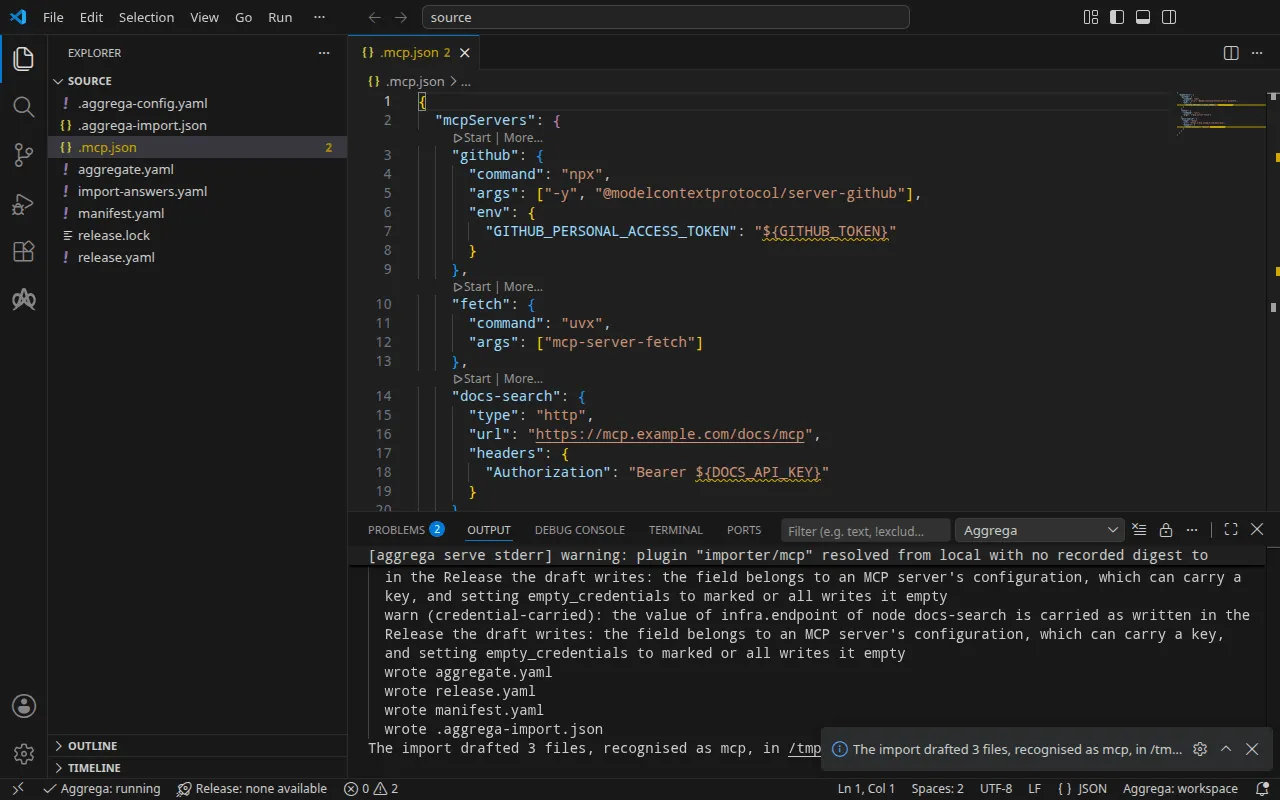
모든 서버는 표준 라이브러리의 MCP 도구 core/ai-tool/mcp의 인스턴스이므로, 가져오기는 어떤 후보도 평가하지 않고 mapped 줄도 출력하지 않습니다.
warn줄은 서버 구성이 담고 있는 값을 지목합니다. 어떤 MCP 클라이언트도 이 값들을 자격 증명으로 표시하지 않지만, 어느 값에든 자격 증명이 담길 수 있으므로 — 명령줄 인수 안의 키, 주소 안의 토큰 — 가져오기는 담겨 있던 명령줄의 각 항목, 각 헤더, 각 주소를 값이 아니라 서버와 위치로 지목합니다. 초안을 공유하기 전에 이를 읽어 보십시오.env값${GITHUB_TOKEN}은 변수 참조일 뿐이므로 자체 값을 담고 있지 않으며 어떤 경고도 이를 지목하지 않습니다.Pull complete줄은 가져오기가 초안으로 작성된 Release가 의존하는 것을aggrega pull처럼release.lock으로 가져오는 것으로, 초안을 즉시 검증하고 빌드할 수 있게 합니다.--offline에서는 가져오기가 아무것도 가져오지 않고 실행할aggrega pull을 알려 줍니다.
작성하는 내용
Aggregate, Release, Manifest의 이름은 imported/mcp입니다. 클라이언트의 구성에는 자체 이름이 없으므로 파일 이름 .mcp.json을 따르며, 레지스트리의 server.json은 그 name을 따릅니다. 네임스페이스는 임포터의 target_namespace 설정이 정하며, 다른 값을 설정하지 않으면 imported입니다(설정).
aggregate.yaml — 서버마다 인스턴스 하나이며, 아직 이를 사용하는 것은 없습니다:
apiVersion: aggrega.ai/v1beta1kind: Aggregatemetadata: name: imported/mcp version: 0.1.0 description: Draft Aggregate imported from a source in the mcp format.spec: components: github: type: core/ai-tool/mcp fetch: type: core/ai-tool/mcp docs-search: type: core/ai-tool/mcprelease.yaml — 구성에 명시된 대로 각 서버를 실행하거나 접근하는 방법과, GitHub 서버의 토큰을 읽어 오는 Secret입니다:
apiVersion: aggrega.ai/v1beta1kind: Releasemetadata: name: imported/mcp # environment is a drafted default, since no source names the environment this Release deploys to; change it to name the one it deploys to. environment: development version: 0.1.0 description: Draft Release imported from a source in the mcp format.spec: aggregate: imported/mcp manifest: imported/mcp components: github: infra: stdio_command: - "npx" - "-y" - "@modelcontextprotocol/server-github" stdio_runtime: npm features: server_env: type: core/referenced-secret infra: # Left for the Release, since the source cannot supply it: the name of a Kubernetes Secret already in the namespace holding the environment github is started with, one data key per variable, each named as the variable it holds: GITHUB_PERSONAL_ACCESS_TOKEN. origin: "github-mcp-token" fetch: infra: stdio_command: - "uvx" - "mcp-server-fetch" stdio_runtime: pypi # The headers the source sends this server, which no infrastructure key of core/ai-tool/mcp takes, since a remote server's credential is held by each consumer, on its connection to the tool: # - Authorization: "Bearer ${DOCS_API_KEY}" docs-search: infra: endpoint: "https://mcp.example.com/docs/mcp"- 환경
development는 어떤 구성도 환경을 지정하지 않기 때문에 가져오기가 기록하는 기본값입니다. Release를 다른 곳에 배포한다면 변경하십시오. - **
stdio_runtime**은 각 명령에서 읽어 냅니다.npx는 npm 패키지를,uvx는 PyPI 패키지를 실행합니다. - GitHub 토큰. 서버의 환경은 해당
server_env슬롯이 됩니다. Kubernetes에서는core/referenced-secret-set의 실현인helm/k8s-secret-set이 주어진 값을 빌드가 렌더링하는 Secret에 기록하므로 토큰이 파일에 들어가게 됩니다. 그래서--target helm의 경우 가져오기는 대신core/referenced-secret을 첨부하여, 클러스터가 이미 보유한 Secret인 답변github-mcp-token을 변수마다 하나의 데이터 키GITHUB_PERSONAL_ACCESS_TOKEN과 함께 지정합니다. 브리지는 그 Secret의 모든 데이터 키를 같은 이름의 변수로 가져오므로, 서버는 사용자의 머신에서와 같은 방식으로 토큰을 읽고, 렌더링된 어떤 파일에도 토큰이 담기지 않습니다. Authorization헤더는 주석으로 남습니다. 원격 서버의 자격 증명은 그것을 호출하는 쪽이, 도구에 대한 호출자 자신의 연결에서 보유하며, 이 워크스페이스에는 아직 호출자가 없습니다. 에이전트를docs-search에 배선할 때 헤더는 그 연결에 들어갑니다.
manifest.yaml — 서버마다 이름으로 지정한 실현 하나와 Secret의 실현입니다:
apiVersion: aggrega.ai/v1beta1kind: Manifestmetadata: name: imported/mcp version: 0.1.0spec: mappings: components: type: {} name: github: helm/mcp-stdio-bridge fetch: helm/mcp-stdio-bridge docs-search: helm/mcp-remote features: type: core/referenced-secret: helm/k8s-existing-secret세 가지 Kubernetes Recipes가 core/ai-tool/mcp를 실현합니다 — 하나는 이미지로 게시된 서버용, 하나는 브리지 뒤에서 실행되는 패키지용, 하나는 다른 누군가가 운영하는 서버용이며 — 어느 것이 맞는지는 구성에 명시된 각 서버의 속성입니다. 그래서 가져오기는 각 인스턴스를 이름으로 매핑합니다. 명령줄에서 시작되는 github와 fetch는 stdio 브리지 helm/mcp-stdio-bridge 뒤에서 실행되고, 다른 누군가가 운영하는 docs-search는 helm/mcp-remote에 매핑되는데, 이는 아무것도 실행하지 않고 주소를 게시합니다. 토큰의 Secret은 helm/k8s-existing-secret에 매핑되며, 이는 Secret을 작성하는 대신 참조합니다.
release.lock은 Release가 해석된 카탈로그 엔터티를 다이제스트로 기록하며, .aggrega-import.json은 가져오기가 작성한 내용의 기록으로, 이후의 aggrega import --sync가 이를 읽습니다.
Docker Compose에서
서버는 Docker Compose에서도 실행됩니다. aggrega import .mcp.json --target compose는 github와 fetch를 compose/mcp-stdio-bridge에, docs-search를 compose/mcp-remote에 매핑하고, GitHub 서버의 환경을 구성에 작성된 그대로 유지합니다. 즉 값이 변수 참조 ${GITHUB_TOKEN}인 core/referenced-secret-set 항목이며, 이를 실현하는 compose/dotenv-secret-set은 그 참조를 작성된 그대로 서비스의 환경에 기록하므로 스택이 시작될 때 Docker Compose가 셸에서 값을 채웁니다. 이 가져오기는 아무것도 묻지 않으며, 답변 파일의 Secret 이름을 사용하지 않고 그대로 유지합니다.
검증 및 빌드
aggrega validate --release release.yamlaggrega build --release release.yaml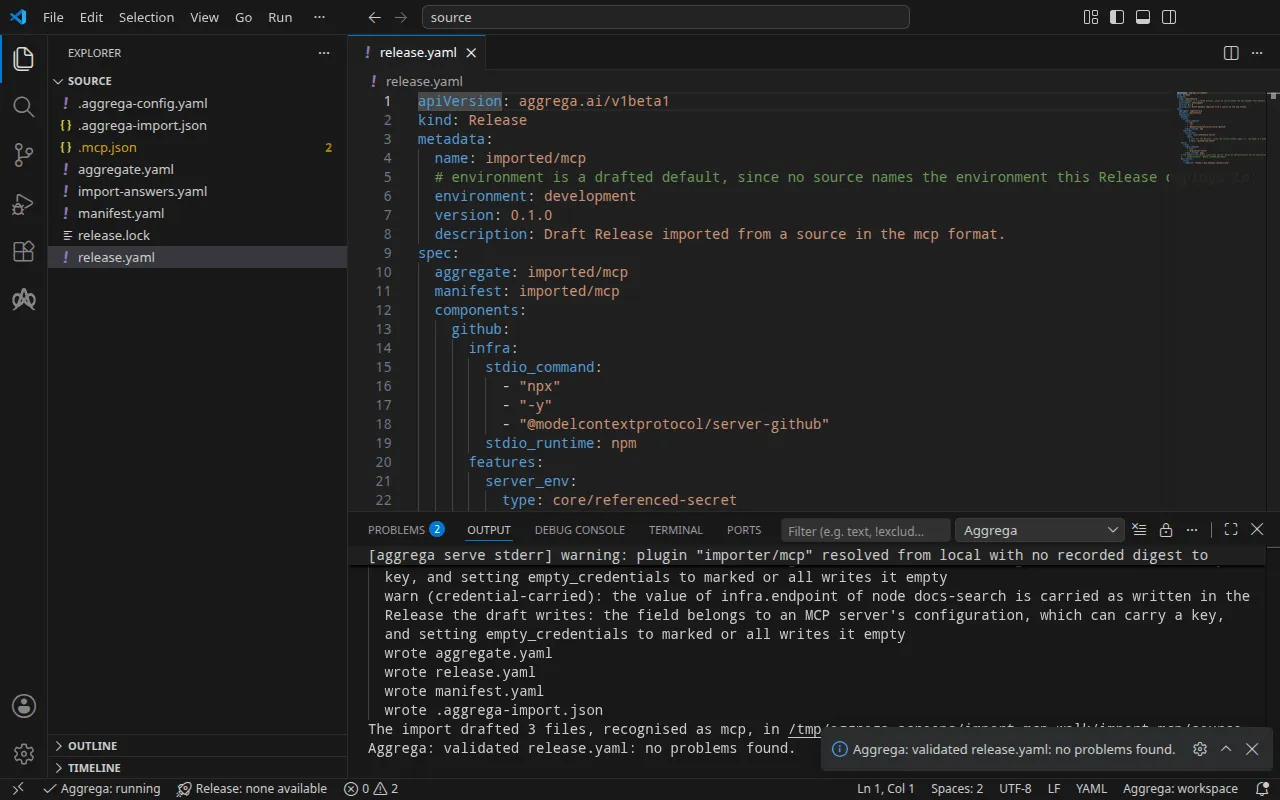
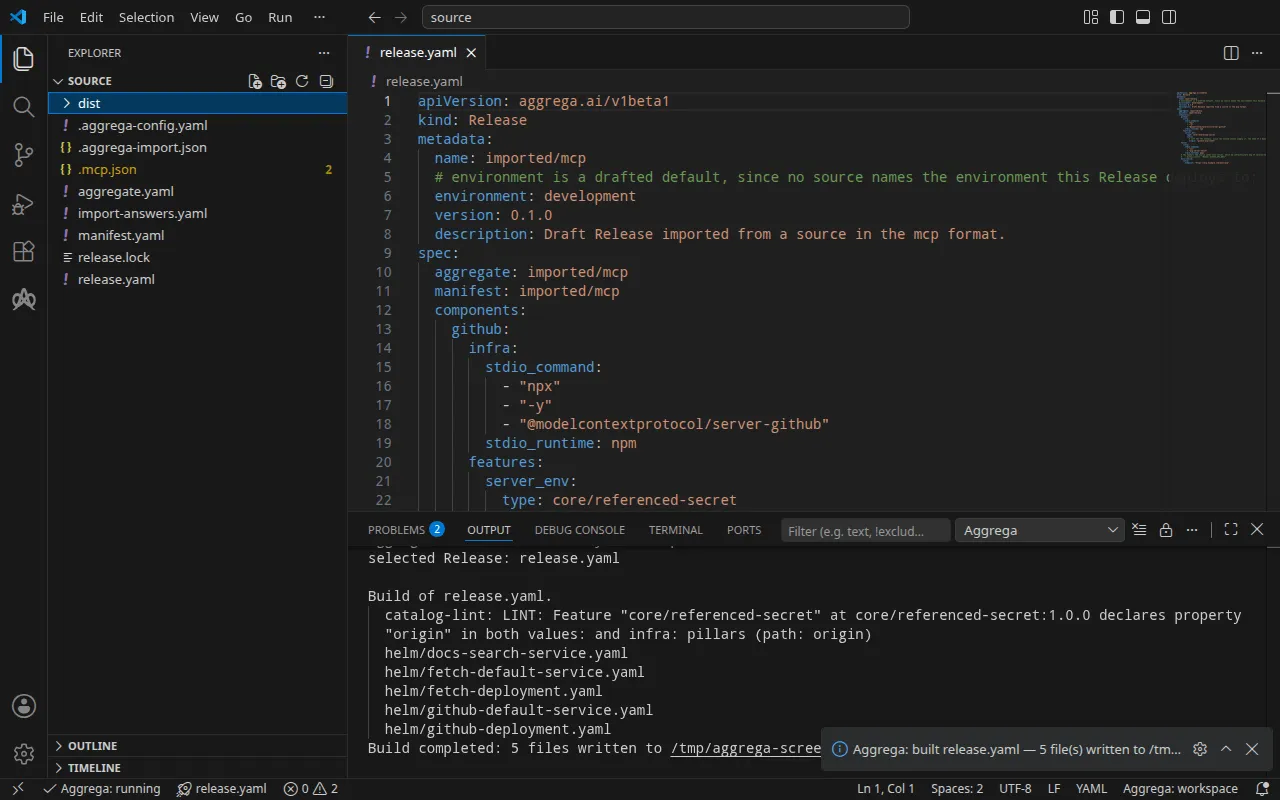
검증 결과는 다음과 같습니다:
notice: LINT: Feature "core/referenced-secret" at core/referenced-secret:1.0.0 declares property "origin" in both values: and infra: pillars (path: origin)release dependency validation passed: release.yaml (schema-pillar + dependency pillars)그리고 빌드는 다음과 같습니다. 여기서 <workspace>는 실행한 폴더를 나타냅니다:
notice: LINT: Feature "core/referenced-secret" at core/referenced-secret:1.0.0 declares property "origin" in both values: and infra: pillars (path: origin)[… omitted: a total build time, which differs per run]Build completed: 5 files written to <workspace>/distnotice 줄은 권고 사항입니다. Feature는 origin을 Aggregate의 values 또는 Release의 infra에서 받아들이며, 이 알림은 하나의 리프가 양쪽 모두에 선언되어 있음을 보고합니다. 판정은 바뀌지 않습니다.
빌드는 dist/helm/ 아래에 브리지된 두 서버 각각에 대해 Deployment와 Service를 하나씩, docs-search에 대해 Service 하나를 작성합니다. dist/helm/github-deployment.yaml에 있는 GitHub 서버의 컨테이너는 서버의 명령줄로 브리지를 실행하고 Secret에서 환경을 가져옵니다:
containers: - name: main image: ghcr.io/supercorp-ai/supergateway:4.1.0@sha256:1938c43538a5308bce07d58028e9de00b7acfecb40b39b059b2f3931800ad910 args: - --stdio - '''npx'' ''-y'' ''@modelcontextprotocol/server-github''' - --outputTransport - streamableHttp - --stateful - --port - "8080" - --streamableHttpPath - /mcp - --healthEndpoint - /healthz ports: - name: http containerPort: 8080 env: - name: MCP_TOOL_SIDE_EFFECTS value: mutating - name: MCP_TOOL_TIMEOUT_SECONDS value: "30" - name: MCP_TOOL_PORT value: "8080" envFrom: - secretRef: name: github-mcp-token [… omitted: the container's resources and its readiness probe]dist/helm/docs-search-service.yaml은 아무것도 실행하지 않습니다. 다른 누군가가 운영하는 서버에 클러스터 내부의 이름을 부여합니다.
apiVersion: v1kind: Servicemetadata: name: docs-search [… omitted: the labels and annotations the build writes on every resource]spec: type: ExternalName externalName: mcp.example.com ports: - port: 443AI 어시스턴트 사용
Aggrega의 도구로 설정된 AI 어시스턴트도 같은 일을 할 수 있습니다. 다음 프롬프트를 붙여 넣으십시오.
Aggrega 도구만 사용하고, 직접 폴더를 만들지 마세요. Workspace 폴더에 아직 `import-mcp` 폴더가 없으면 `example`을 `import-mcp`로 설정하고 `dir` 없이 `scaffold` 도구를 한 번 호출하세요. 이 도구는 새 `import-mcp` 폴더에 예제를 작성하며, 그 `source` 폴더에는 이 페이지가 가져오는 내용이 들어 있습니다. 그런 다음 `workspace_root`를 `import-mcp/source`로, `source`를 `.mcp.json`으로, `target`을 `helm`으로 설정하여 `import` 도구를 호출하세요. 이 도구는 필요한 답을 `.mcp.json` 옆의 `import-answers.yaml`에서 읽고, 초안을 `import-mcp/source`에 작성하며, 초안에 필요한 것을 풀합니다. 그런 다음 `workspace_root`를 `import-mcp/source`로, `release`를 `release.yaml`로 설정하여 `validate` 도구를 호출하고, `workspace_root`를 `import-mcp/source`로, `release`를 `release.yaml`로, `write`를 true로 설정하여 `build` 도구를 호출하세요. 빌드가 작성한 파일을 알려 주세요. 파일은 `import-mcp/source/dist/` 아래에 있습니다.VS Code에서 열기
Visual Studio Code용 Aggrega 확장을 설치한 상태에서, 가져오기가 초안을 작성한 폴더 import-mcp/source를 VS Code에서 엽니다. 이 폴더에는 Release가 하나, 즉 초안으로 작성된 release.yaml이 있으므로 편집기가 이를 자동으로 선택하고, 초안을 편집하는 동안 그 Release를 기준으로 검사하여 발견한 내용을 파일과 문제 패널에 표시합니다. 명령 팔레트의 Aggrega: Show topology graph는 Release의 구성 요소와 그 사이의 연결을 그립니다. Aggrega: Build, Aggrega: Preview build, Aggrega: Pull은 같은 Release에 대해 동작하며, 각각 작업 표시줄에 있는 Aggrega 보기의 Commands 패널에서 버튼으로도 사용할 수 있습니다. Build는 폴더의 dist/에 파일을 작성합니다. 나머지 내용은 Visual Studio Code에서 Aggrega 사용하기에서 다룹니다.
실행하기
빌드의 어떤 부분도 github-mcp-token Secret을 작성하지 않으므로, 파일을 적용하기 전에 생성합니다. 토큰을 github-token.env에 한 줄 GITHUB_PERSONAL_ACCESS_TOKEN=<your token>으로 작성하고, 그 파일에서 Secret을 생성합니다. 그러면 클러스터가 토큰을 보관하므로 파일은 삭제합니다:
kubectl create secret generic github-mcp-token --from-env-file=github-token.envrm github-token.envsecret/github-mcp-token created가져오기 실행 방식의 실행 단계에서 설명하는 대로 빌드를 적용하고, 두 서버를 기다립니다:
kubectl apply -R -f dist/helm/kubectl wait --for=condition=Available deployment.apps/fetch deployment.apps/github --timeout=5mservice/docs-search createdservice/fetch-default createddeployment.apps/fetch createdservice/github-default createddeployment.apps/github createddeployment.apps/fetch condition metdeployment.apps/github condition metDocker Compose에서는 --target compose로 가져와 빌드한 워크스페이스에서, 셸의 GITHUB_TOKEN에 토큰을 넣고 스택을 시작합니다. Docker Compose는 스택이 시작될 때 이를 읽습니다:
docker compose -p mcp -f dist/compose/docker-compose.yaml up -d --wait테스트하기
브리지는 MCP의 Streamable HTTP 전송을 통해 포트 8080의 /mcp에서 각 서버를 제공합니다. MCP의 initialize 요청으로 fetch 서버에 세션을 열도록 요청합니다. 이 요청은 토큰을 읽지 않습니다.
Docker Compose에서는 스택의 네트워크 mcp_compose에 있는 일회용 컨테이너에서 보냅니다. 이 네트워크에서 서버의 이름은 fetch입니다:
docker run --rm --network mcp_compose curlimages/curl:8.11.1 -sS http://fetch:8080/mcp \ -H 'Content-Type: application/json' -H 'Accept: application/json, text/event-stream' \ -d '{"jsonrpc": "2.0", "id": 1, "method": "initialize", "params": {"protocolVersion": "2025-06-18", "capabilities": {}, "clientInfo": {"name": "test-it", "version": "1.0.0"}}}': keepalive
[… omitted: the same comment, repeated while the server starts]
event: messagedata: {"jsonrpc":"2.0","id":1,"result":{"capabilities":{"prompts":{"listChanged":false},"resources":{"listChanged":false,"subscribe":false},"tools":{"listChanged":false}},"protocolVersion":"2025-06-18","serverInfo":{"name":"mcp-fetch","version":"2026.11.11"}}}Kubernetes에서는 로컬 포트를 서버의 Service fetch-default로 포워딩하고, 명령은 실행 상태로 둡니다:
kubectl port-forward svc/fetch-default 8080:8080다른 터미널에서 포워딩된 포트로 같은 요청을 보냅니다.
curl -sS http://127.0.0.1:8080/mcp \ -H 'Content-Type: application/json' -H 'Accept: application/json, text/event-stream' \ -d '{"jsonrpc": "2.0", "id": 1, "method": "initialize", "params": {"protocolVersion": "2025-06-18", "capabilities": {}, "clientInfo": {"name": "test-it", "version": "1.0.0"}}}': keepalive
: keepalive
event: messagedata: {"jsonrpc":"2.0","id":1,"result":{"capabilities":{"prompts":{"listChanged":false},"resources":{"listChanged":false,"subscribe":false},"tools":{"listChanged":false}},"protocolVersion":"2025-06-18","serverInfo":{"name":"mcp-fetch","version":"2026.11.11"}}}응답에는 서버 이름 mcp-fetch가 나옵니다. 응답에는 시간이 걸립니다. 브리지가 세션마다 서버의 명령줄 uvx mcp-server-fetch를 시작하고, uvx가 먼저 서버의 패키지를 다운로드하고 설치하기 때문입니다. 실행에서는 Kubernetes에서 약 30초, Docker Compose에서 약 1분이 걸렸습니다. : keepalive 줄은 그동안 스트림이 보내는 주석입니다.
GitHub 서버는 Docker Compose에서는 http://github:8080/mcp에서, Kubernetes에서는 kubectl port-forward svc/github-default 8080:8080을 통해 같은 요청에 응답합니다. initialize는 토큰을 읽지 않으므로 토큰에 무엇이 들어 있든 응답합니다. 실행에서는 자리 표시자 토큰을 사용했습니다:
[… omitted: the keepalive comments, sent while npx installs the server]event: messagedata: {"result":{"protocolVersion":"2024-11-05","capabilities":{"tools":{}},"serverInfo":{"name":"github-mcp-server","version":"0.6.2"}},"jsonrpc":"2.0","id":1}포트 포워딩을 중지한 다음, 적용한 리소스와 Secret을 제거합니다:
kubectl delete -R -f dist/helm/kubectl delete secret github-mcp-tokenDocker Compose에서는 스택을 중지하고 제거합니다:
docker compose -p mcp -f dist/compose/docker-compose.yaml down